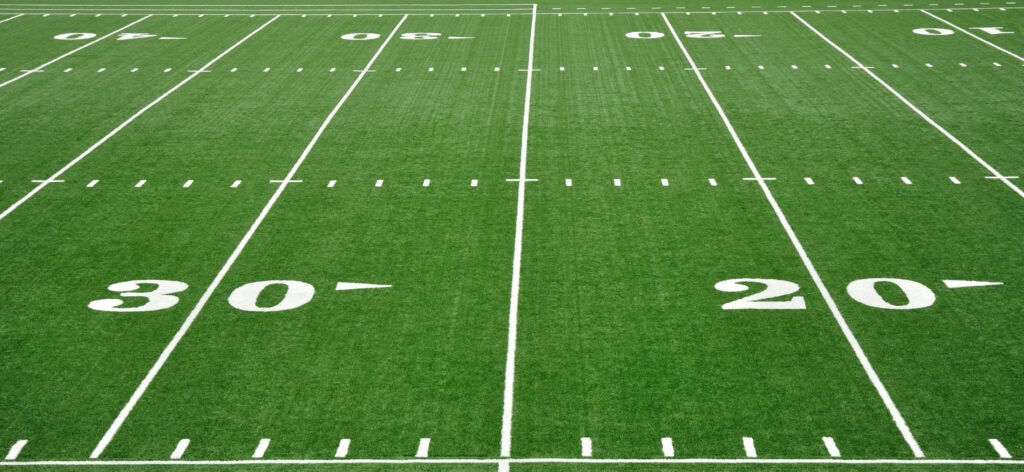
What you may have heard
Some athletes and parents have raised concerns that playing on artificial turf, especially turf with crumb rubber infill made from recycled tires, may increase the risk of developing cancer. Media reports and anecdotal clusters of illness have contributed to public concern.
What science tells us
Artificial turf contains materials that can include polycyclic aromatic hydrocarbons (PAHs), heavy metals, and other potentially hazardous substances (MDPH). These chemicals have been linked to cancer in other contexts, but the question of whether playing on artificial turf causes cancer remains unresolved.
Epidemiological Evidence
- A 2023 review of global studies found that most epidemiological research on artificial turf and cancer is limited and inconsistent. The review concluded there is no clear evidence of increased cancer risk, but also highlighted the poor quality of existing studies and the need for more rigorous research (PMID: 39982256).
- A 2018 ecological study of over 7,000 lymphoma cases among 14- to 30-year-olds in California found no association between county-level synthetic turf field density and lymphoma incidence across race, sex, or income subgroups (PMID: 29427968).
Laboratory Evidence / Supporting
- A 2019 Dutch study analyzed rubber granulate from 100 synthetic turf fields and found several carcinogenic substances, but estimated exposures for polycyclic aromatic hydrocarbons (PAHs), phthalates, and metals were below health concern thresholds, suggesting no meaningful cancer risk from playing on these fields (PMID: 30568187).
IARC Carcinogen Classification
Artificial turf itself has not been evaluated by the International Agency for Research on Cancer (IARC). However, some chemicals commonly found in crumb rubber, such as benzene and certain PAHs, are classified by the IARC as Group 1 (carcinogenic to humans) or Group 2B (possibly carcinogenic to humans).
How to reduce your risk
If you are concerned about artificial turf exposure:
- avoid eating or drinking directly on the field;
- wash hands and exposed skin after playing;
- change clothes and clean shoes after play; and
- support alternative infill materials (e.g., cork, sand) when available.
Bottom line
Artificial turf contains several chemicals known to be hazardous in other settings, but current evidence does not show a clear link between turf exposure and cancer. More well-designed, long-term studies are needed to clarify any potential risks.