What you may have heard
Soy contains phytoestrogens, plant-based compounds including isoflavones, that can weakly mimic estrogen in the body. This has raised concerns that consuming soy products can increase your risk of breast cancer.
What the science tells us
Epidemiological Evidence
Current evidence strongly suggests that soy does not cause breast cancer. In fact, soy consumption is linked to either no change or a reduction in cancer risk. A review of several observational studies found that high intake of total soy products, such as soymilk and tofu, was associated with a lower overall cancer risk (Wang et al.) A meta-analysis of prospective cohort studies also reported that soy was linked to a 10% reduction in cancer incidence (Fan et al.).
Soy consumption is associated with a decreased risk of breast cancer in Asian countries, where consumption is generally high. A comprehensive analysis of epidemiological studies found an inverse correlation between soy isoflavone intake and breast cancer risk in both pre- and postmenopausal women (Chen et al.). However, it is unclear if soy has the same protective effects against breast cancer in Western populations, where intake tends to be lower.
Laboratory Evidence/Supporting Evidence
Isoflavones in soy products are not as potent as estrogen and function differently in the body. While early mice studies linked high doses of soy isoflavones with increased breast cancer risk, researchers found that animals process the compounds differently and in much higher doses than humans. Isoflavones may block estrogen receptors in humans, potentially suppressing tumor growth (ACS).
How to reduce your risk
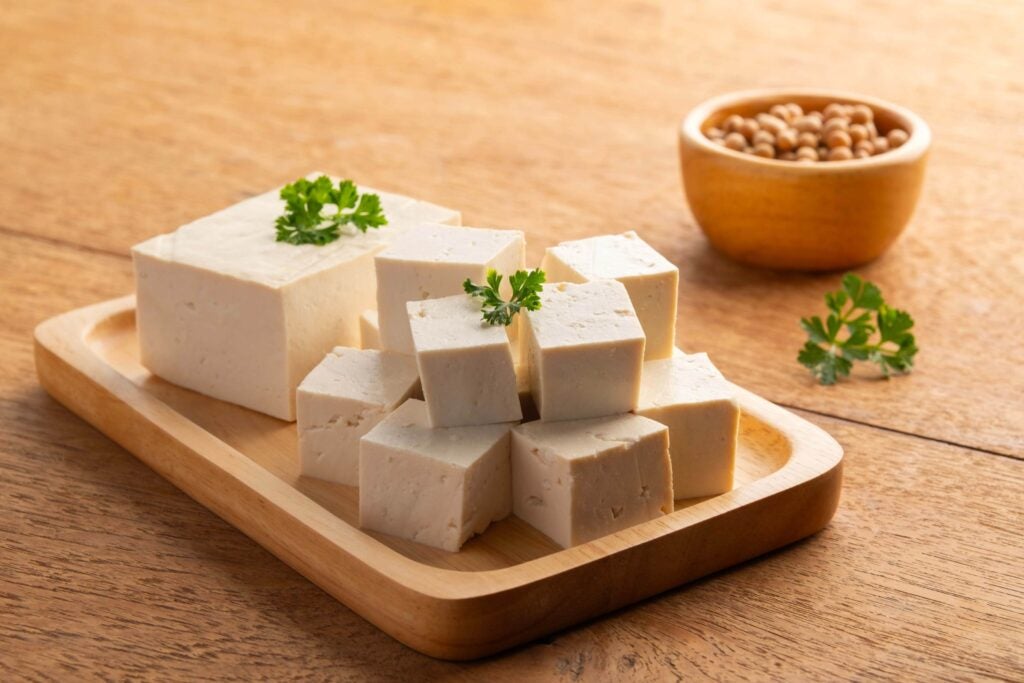
- Choose whole soy foods. Opt for nutrient-rich options like soymilk, edamame, tofu, and tempeh.
- Be mindful of soy supplements and protein powders. The safety and benefits of these products remain unclear and evidence is mixed, according to the American Cancer Society.
- Practice moderation. Like any food, soy should be part of a balanced, varied diet rather than consumed in excess.
Bottom line
Soy products are safe to eat and do not increase your risk of breast cancer, nor cancer overall. Current research suggests that eating whole soy foods may have protective effects against cancer, particularly in Asian countries where soy consumption is more frequent. Further research is needed to determine soy’s potentially protective effects in Western populations.
Check out this Cancer Questions video about the relationship between soy and cancer risk from the Dana-Farber Cancer Institute.