What you may have heard
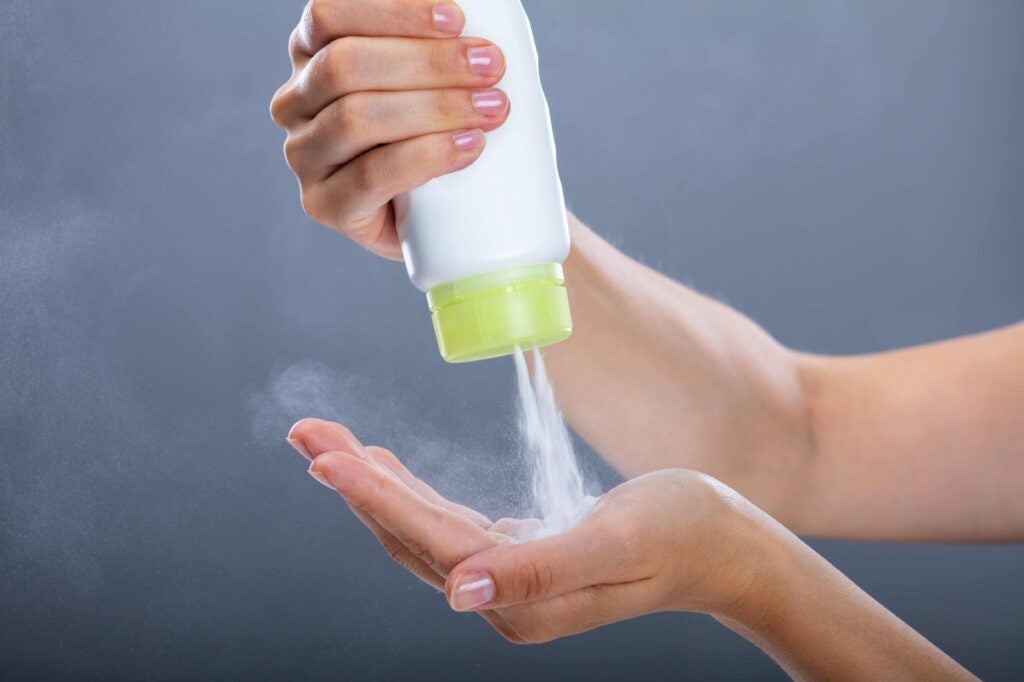
Many people believe that using talcum powder increases cancer risk such as ovarian cancer. Some lawsuits and public concerns center on possible asbestos contamination and inflammation caused by talc itself.
What science tells us
Asbestos-contaminated talc is classified by IARC as Group 1 (carcinogenic to humans). Even talc not known to contain asbestos is classified as Group 2A (probably carcinogenic) based on sufficient animal evidence. These classifications reflect concern, not certainty. The American Cancer Society emphasizes that study results on talc and cancer remain mixed and inconclusive (IARC) (ACS).
Epidemiological Evidence
- A 1992 case-control study found that women who applied talc had a 1.5-fold increased risk of epithelial ovarian cancer. The risk rose to 1.8 for daily users and 2.8 for those reporting more than 10,000 applications, although that subgroup was small (PubMed).
- However, a quantitative bias analysis published in 2024 reexamined earlier findings and reported an odds ratio of 1.33 for genital powder use and ovarian cancer risk. Researchers noted that recall and reporting biases could influence results (PubMed).
- A 2023 systematic review concluded there is “suggestive evidence of no association” between perineal talc use and ovarian cancer at human-relevant exposure levels. It also found no evidence linking talc to endometrial or cervical cancer (PubMed).
Laboratory Evidence / Supporting Evidence
Animal studies show that talc does not move past the cervix or stay localized to the ovaries or uterus. Mechanistic data show limited in vitro effects at unrealistic exposure levels and no clear biological pathway for cancer development from talc use.
IARC Carcinogen Classification
IARC classifies asbestos-contaminated talc as Group 1 (carcinogenic to humans), and talc not containing asbestos as Group 2A (probably carcinogenic to humans) based on limited human evidence and strong mechanistic concerns (IARC).
How to reduce your risk
If you’re concerned, choose cornstarch-based powders instead of talc-based products. Avoid inhaling the powder and limit long-term or frequent perineal use, at least until future studies provide clearer conclusions.
Bottom line
Evidence remains mixed. Some older studies suggest a modest increase in ovarian cancer risk linked to perineal talc use, but cohort data and systematic reviews show no clear causal association. Given the inconsistency, IARC labels talc without asbestos as “probably carcinogenic,” but this does not confirm that talc causes cancer in real-world use.